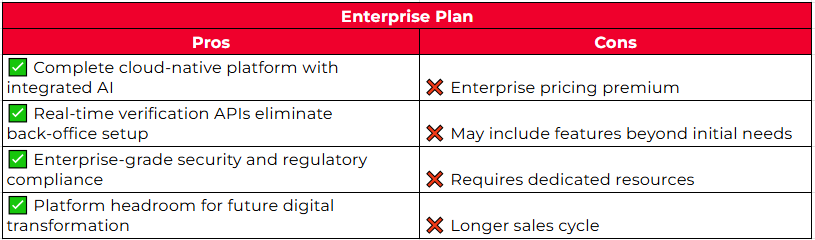
The Bottom Line  Enterprise suits large organizations needing comprehensive digital transformation capabilities with the flexibility to digitize any business process as needs evolve.
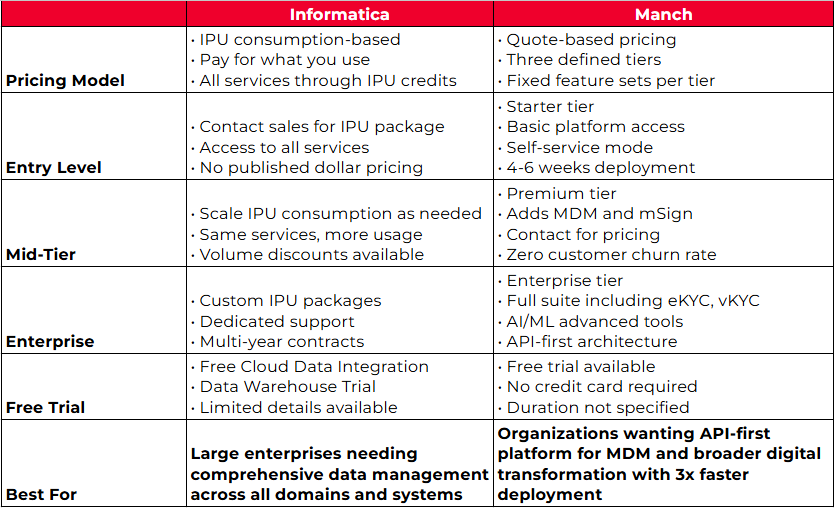
Informatica Feature Value Breakdown (vs Manch)
Implementation Speed and Complexity
Informatica’s Approach: As a legacy platform, Informatica implementations typically span months to years, involving extensive configuration of multiple services, technical architecture setup, and comprehensive training programs. The platform’s breadth means organizations must plan for data integration, quality rules, governance policies, and MDM configuration even if they only need specific capabilities. This comprehensive approach ensures robust solutions but extends timelines significantly, often preventing quick wins.
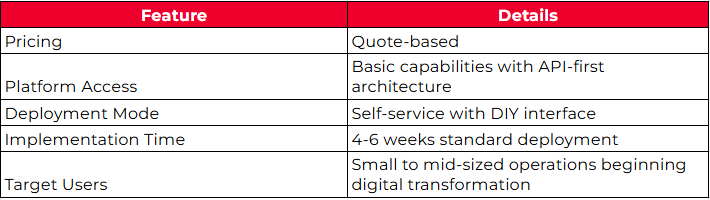
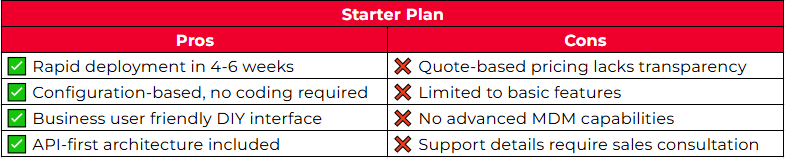
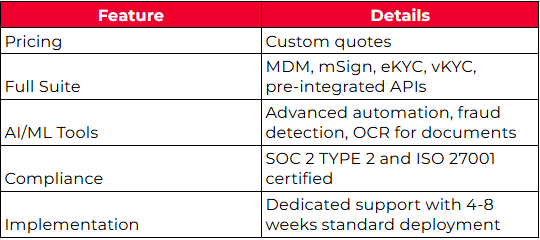
Manch’s Approach: Manch deploys in 4-6 weeks standard, sometimes as quickly as 4-8 weeks for complex implementations, through its low-code/no-code platform and focused scope. Clients have achieved compliance implementations in as little as three weeks. The platform’s configuration-based approach enables rapid workflow setup without coding, while pre-built frameworks and accelerators cut delivery times by 30-50% compared to traditional platforms.
Value Verdict: Manch delivers 3x faster deployment for organizations needing quick implementation of MDM and digital transformation capabilities, while Informatica suits enterprises planning multi-year comprehensive data initiatives where time-to-value is less critical.
Technical Requirements and User Accessibility
Informatica’s Approach: The old, legacy platform requires significant technical expertise, with dedicated roles for data engineers, ETL developers, and Informatica specialists typically needed. While powerful for complex scenarios, this technical depth creates barriers for business users who must rely on IT for most configuration changes. The learning curve remains steep even with Informatica’s investments in low-code capabilities.
Manch’s Approach: Built as a true no-code platform from inception, Manch empowers business users to configure workflows, set validation rules, and modify processes without IT involvement using the drag-and-drop interface. Subject matter experts can directly implement their requirements through the DIY interface, reducing the IT bottleneck common in data management projects. Business teams can make minor changes themselves without additional costs or change request delays.
Value Verdict: Manch excels for organizations wanting business-led change and reduced IT dependency, particularly for external stakeholder management and business process digitization.
Scope and Platform Versatility
Informatica’s Approach: As a comprehensive data management platform, Informatica addresses every aspect of enterprise data with strong ETL, integration, and governance capabilities. This breadth provides value for organizations needing unified data management but means paying for capabilities beyond specific requirements. The platform excels at complex, multi-domain MDM scenarios but cannot extend beyond data management into broader business process digitization.
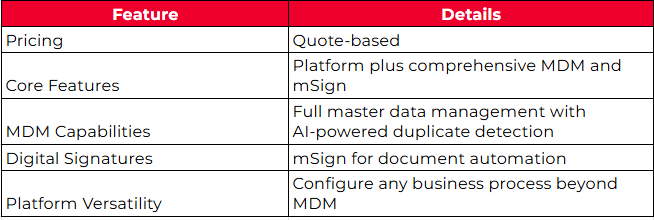
Manch’s Approach: While excelling at MDM, Manch is fundamentally a digital transformation platform capable of digitizing any business process. Customers achieve zero churn rate because they discover additional applications beyond the initial purpose – contract management, asset tracking, retailer onboarding, vendor management, and numerous other workflows on the same platform. Features like eKYC, video KYC, document management with OCR, and real-time verification APIs are built-in capabilities rather than requiring additional components.
Value Verdict: Informatica excels for pure data management needs, while Manch provides superior value for organizations wanting MDM plus the versatility to digitize any business process on the same platform.
API Integration and Real-Time Verification
Informatica’s Approach: Informatica offers extensive API capabilities and over 300 connectors for data integration. However, real-time verification against public databases requires custom development or additional tools. The platform focuses on data movement and transformation rather than instant validation, requiring organizations to build or buy separate verification capabilities.
Manch’s Approach: The API-first architecture with pre-integrated APIs enables real-time data verification, validation, and authentication within seconds. This eliminates the need for organizations to set up back-office teams for manual verification processes. The platform can verify data against public databases including PAN, GSTN, and bank accounts in real-time, providing immediate validation that traditional systems cannot match. Multi-entity onboarding workflows enable organizations to handle complex scenarios involving multiple parties within a single, streamlined process.
Value Verdict: Manch’s pre-integrated APIs deliver immediate business value for organizations needing real-time verification, while Informatica requires additional development for similar capabilities.
Cost Structure and Total Cost of Ownership
Informatica’s Approach: The IPU consumption model provides flexibility but lacks dollar pricing transparency, requiring sales engagement for quotes. Organizations must forecast consumption across multiple services, and costs can escalate quickly with increased usage. While volume discounts exist, the entry point remains high for many organizations, with TCO often exceeding budget expectations.
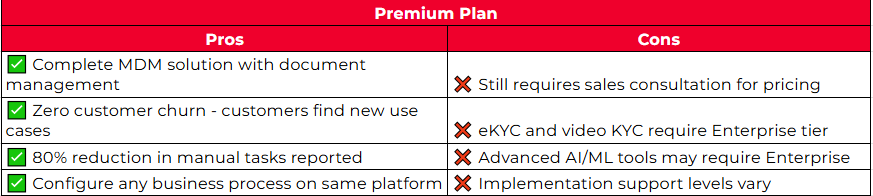
Manch’s Approach: While also quote-based, Manch’s tiered structure (Starter, Premium, Enterprise) provides clearer progression paths. The focused scope means more predictable costs without paying for unused capabilities. Organizations report 30-40% lower TCO compared to larger enterprise platforms when considering licensing, implementation, and ongoing maintenance costs combined. The platform delivers comparable or superior functionality to industry leaders while maintaining 30-50% lower costs over a 3-5 year period.
Value Verdict: Manch delivers enterprise-grade capabilities at a fraction of the cost for organizations seeking predictable pricing and faster ROI on digital transformation initiatives.
Informatica Pricing FAQ
Does Informatica publish its pricing?
Informatica publishes IPU rate cards showing consumption rates for different service scalars, but does not publish dollar pricing for IPU packages. Organizations must contact sales for custom quotes based on their requirements. The platform offers free trials for Cloud Data Integration and Data Warehouse capabilities, but full platform pricing requires sales consultation.
How does the IPU consumption model work?
IPUs (Informatica Processing Units) function as credits that organizations purchase and consume across different services. Usage is tracked automatically with real-time dashboards showing consumption. Administrators automatically receive alerts when consumption reaches standard thresholds (25%, 50%, 75%, 95%, 100%), and can configure additional custom alerts to manage their IPU balance.
What makes Manch different from Informatica for MDM and digital transformation?
While Informatica offers comprehensive MDM across all domains as part of its broader data management platform, Manch delivers a cloud-native, new-age platform with integrated AI that can digitize any business process through configuration rather than coding. Manch’s API-first architecture with pre-integrated APIs enables real-time verification in seconds, deploys in 4-6 weeks versus months, enables business user configuration through its DIY interface, and provides platform versatility that drives zero customer churn as organizations discover new use cases.
Can Informatica and Manch work together?
Yes, organizations could potentially use Manch for rapid MDM implementation, real-time verification, and broader business process digitization while leveraging Informatica for specific data integration needs. As an SAP partner with system-agnostic design, Manch integrates seamlessly across SAP, Oracle, Microsoft, Salesforce, and legacy systems, potentially including Informatica environments where appropriate.
Which platform offers better ROI?
Informatica reports average customer ROI of 413% for comprehensive implementations. Manch clients report 80% reduction in manual tasks, 60% reduction in back-office resources, and processes like onboarding reduced from seven days to 30 minutes. ROI depends on use case: Informatica for pure enterprise-wide data management, Manch for faster digital transformation with 30-50% lower TCO and the ability to digitize multiple business processes on one platform.
How long does implementation typically take?
Informatica implementations typically span several months to years for full deployment across multiple services. Manch implementations range from 4-6 weeks standard, with some achieving production deployment in just three weeks for compliance solutions. This 3x faster deployment enables organizations to achieve measurable results within the same quarter rather than waiting 6-12 months for ROI.
Why does Manch have zero customer churn?
Manch achieves zero customer churn because customers realize how much more can be done on the platform beyond the initial purpose. Once they start using it for one function like MDM, they discover additional applications for contract management, asset tracking, vendor onboarding, and other business processes. This platform versatility and headroom for future needs eliminates reasons to switch or leave the platform.
Final Verdict: Informatica vs Manch
The choice between Informatica and Manch depends on your organization’s data management scope, digital transformation ambitions, and time-to-value requirements.
 Informatica is a comprehensive enterprise data management platform with strong ETL, integration, and governance capabilities designed for organizations tackling complex, multi-domain data challenges across their entire infrastructure. With IPU-based consumption pricing that provides access to integration, quality, governance, and MDM services, it enables enterprises to consolidate their data management onto a single platform. This consumption model works best for large organizations with heterogeneous data landscapes, companies needing comprehensive data governance and compliance focused purely on data management, and enterprises with technical resources to leverage advanced capabilities and months or years to implement.
Get started with Informatica here.
Manch is a cloud-native, new-age digital transformation platform with integrated AI built on the principle that modern organizations need more than just data management – they need the ability to digitize any business process quickly through configuration rather than coding. By offering API-first architecture with pre-integrated APIs for real-time verification and tiered pricing with deployment in 4-6 weeks, it eliminates the complexity of legacy platforms while delivering immediate value through automated workflows. This modern approach makes it essential for organizations wanting to manage master data while also digitizing contract management, asset tracking, onboarding workflows, and any other business process on the same platform – explaining why customers achieve zero churn rate once they discover the platform’s versatility.
Get started with Manch here.
The fundamental difference reflects divergent philosophies: While Informatica asks “How can we provide comprehensive data management for everything?”, Manch asks “How can we enable organizations to digitize any business process quickly with real-time verification and business user empowerment?”